The Building Safety Act 2022: A New Era in Building Safety
The Building Safety Act 2022 brings significant changes and new responsibilities for everyone involved in construction and building management. To help you navigate these requirements, we’re sharing some practical guidance – but more importantly, we want to advise how CQMS can support you every step of the way.
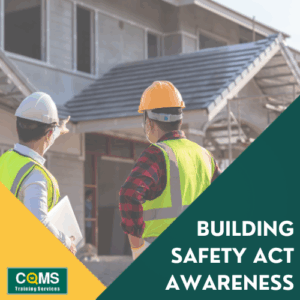
Our dedicated online training course on the Building Safety Act is designed to make compliance simple and clear. In just 45 minutes, your team will gain an understanding of key elements such as higher-risk buildings, dutyholder roles, the gateway system, and the golden thread. The course is CPD accredited, includes a downloadable certificate, and is ideal for clients, designers, contractors, facilities managers, and anyone with responsibilities under the Act. It’s a quick, effective way to ensure your team understands their legal duties and the regulator’s expectations.
Priced at only £20.00 +VAT – enrol today
Prompted by the Grenfell Tower tragedy, the Building Safety Act establishes a comprehensive framework to enhance safety, accountability, and professional competence. This legislation applies to all buildings, not just high-rise residential ones, and sets out legal duties for everyone involved – from contractors and designers to developers and building owners.
OVERVIEW OF THE ACT
- Introduced to improve building safety following Grenfell (June 2017).
- Establishes clear legal responsibilities for all parties in a building’s lifecycle.
- Focuses on competence, safety standards, and transparency.
- Applies to all buildings, regardless of height or type.
RESPONSIBILITIES UNDER THE BUILDING SAFETY ACT 2022
The Accountable Person is a new role introduced for higher-risk residential buildings. This refers to the individual or organisation responsible for the building or its common areas (e.g., corridors, lobbies). Usually a business or organisation, but sometimes an individual, the Accountable Person must:
- Prevent building safety risks, defined as the spread of fire or structural failure.
- Minimise the impact of any such incident.
DUTYHOLDER ROLES AND RESPONSIBILITIES
Under the Building Safety Act, specific responsibilities are assigned to dutyholders involved in building work. These roles may overlap with those under the Construction (Design and Management) Regulations 2015 (CDM 2015), but their focus differs.
|
Dutyholder |
Key Responsibilities |
|
Client |
– Make suitable arrangements to manage building safety risks. – Ensure dutyholders are competent and adequately resourced. – Appoint a Principal Designer (pre-construction) and a Principal Contractor (construction). |
|
Principal Designer (PD) |
– Ensure the design complies with Building Regulations. – Coordinate with other dutyholders to manage safety risks. – Includes additional duties beyond CDM 2015. |
|
Designer |
– Ensure designs do not compromise building safety. – Collaborate with the Principal Designer to manage risks. |
|
Principal Contractor (PC) |
– Coordinate safety and compliance on site. – Ensure construction aligns with approved designs and regulations. – Includes additional duties beyond CDM 2015. – All workers on site must complete relevant and appropriate training on Fire Safety and Fire Emergency Procedures |
|
Contractor |
– Follow safety protocols and comply with Building Regulations. – Cooperate with the Principal Contractor and other dutyholders. – All workers on site must complete relevant and appropriate training on Fire Safety and Fire Emergency Procedures |
Important Distinction
Although the titles of dutyholders under the Building Safety Act mirror those under CDM 2015, their responsibilities differ:
- CDM Dutyholders: Focus on managing health and safety risks during construction.
- Building Safety Dutyholders: Focus on compliance with Building Regulations and managing building safety risks throughout the building’s lifecycle.
CHANGES TO THE CDM REGULATIONS 2015
Under the Building Safety Act, dutyholders under CDM 2015—Client, Designer, Principal Designer, Contractor, and Principal Contractor—now have additional responsibilities:
New Duties
- Plan building work with safety in mind
- Manage and monitor compliance with Building Regulations
- Maintain oversight throughout the project lifecycle
Existing CDM Duties
- Cooperate with other dutyholders
- Communicate and share safety information
- Coordinate systems to manage work safely
- Ensure competence of all parties involved
The same individuals and organisations involved in CDM must now also ensure compliance with Building Regulations. The Building Safety Act reinforces the need for competence and accountability across all roles in design and construction.
HOW IS THE BSA GOVERNED?
The Building Safety Regulator (BSR) is an independent regulatory body responsible for overseeing the safety of buildings in England. The Building Safety Regulator (BSR) is currently* within the Health & Safety Executive, and is responsible for:
- Regulating higher-risk buildings.
- Overseeing safety standards across all buildings.
- Promoting competence in design, construction, and building control.
The BSR must approve high-risk residential projects (18m+ or 7+ storeys) at both planning and building control stages. Projects are reviewed at designated gateway points, and unsafe developments may be halted.
*The Ministry of Housing, Communities and Local Government (MHCLG) is due to take over control of the Building Safety Regulator (BSR) on 27.01.2026. This is following a wide-ranging shake-up, with the BSR is being taken out of the Health and Safety Executive (HSE) and will become an arms-length body of the MHCLG.
WHAT DOES THIS MEAN TO YOU?
Under the Building Safety Act, specific responsibilities are assigned to dutyholders involved in building work which may overlap with those under the Construction (Design and Management) Regulations 2015 (CDM 2015), but their focus differs.
An immediate consideration is workforce competence.
All companies should review existing training in place to ensure that key personnel have completed Building Safety Act Awareness training and all site workers hold relevant Fire Safety training.
OTHER CONSIDERATIONS
From 1st July 2025, the Building Safety Act module became a mandatory module within the Common Assessment Standard (CAS) for projects under the Building Regulations 2010. All companies will be required to complete these additional modules if they hold any of the following certifications:
- Achilles – Building Confidence Gold CAS Desktop Assessment
- Compliance Chain – Compliance Chain Gold Supplier Membership
- Constructionline – Constructionline Gold
- CQMS – Safety-Scheme Premium
- SCCS – SCCS Build Assured CAS Lite
- Smas Worksafe – Worksafe Pro
- Veriforce CHAS – CHAS Elite (CAS)
CQMS can provide support with any further certifications asked – please get in touch with us to find out more.
BUILDING SAFETY ACT TERMINOLOGY:
The Gateway System
This is a three-stage checkpoint process for higher-risk buildings:
- Planning Gateway – early safety considerations.
- Construction Gateway – detailed safety checks.
- Completion Gateway – final safety validation.
Each stage involves the BSR and other authorities to ensure fire and structural risks are properly managed.
The Golden Thread
This is a digital record containing essential building safety information:
- Created at the start of construction.
- Continuously updated throughout the building’s lifecycle.
- Maintained by clients and duty holders to ensure accuracy.
The Safety Case Report
- Prepared by the Principal Accountable Person.
- Demonstrates that all safety risks are identified and managed.
- Must be available to the BSR upon request.
Higher-Risk Buildings
Buildings are considered higher-risk if they:
- Are 18 metres or taller (excluding plant-only floors).
- Have 7+ storeys and at least 2 residential units.
- Include care homes or hospitals meeting the above criteria.
Why it matters: Taller buildings pose greater risks in emergencies. Safety rules apply during design, construction, and renovation.
As the industry adapts to these new requirements, staying informed and ensuring your team is competent is essential. Our Building Safety Act training is a simple way to strengthen understanding and support compliance across your organisation. If you need further guidance or have questions about your responsibilities, CQMS are here to help.
TRAINING DESIGNED TO SUPPORT YOUR BUILDING SAFETY ACT OBLIGATIONS:
|
Our Building Safety Act course makes compliance clear and simple. CPD‑accredited with a downloadable certificate, it’s ideal for anyone with responsibilities under the Act and ensures teams understand their legal duties and the regulator’s expectations. Only £20.00 +VAT |
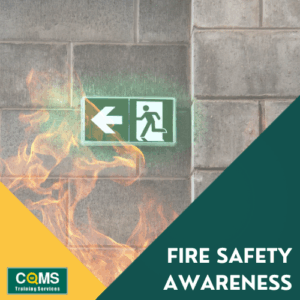 |
This Fire Safety Awareness course covers how fires start and spread, how to identify hazards, and the actions to take in an emergency. It supports key duties under the Building Safety Act by strengthening fire‑risk awareness and helping ensure safer, more compliant buildings. Only £20.00 +VAT |
29 January 2026